

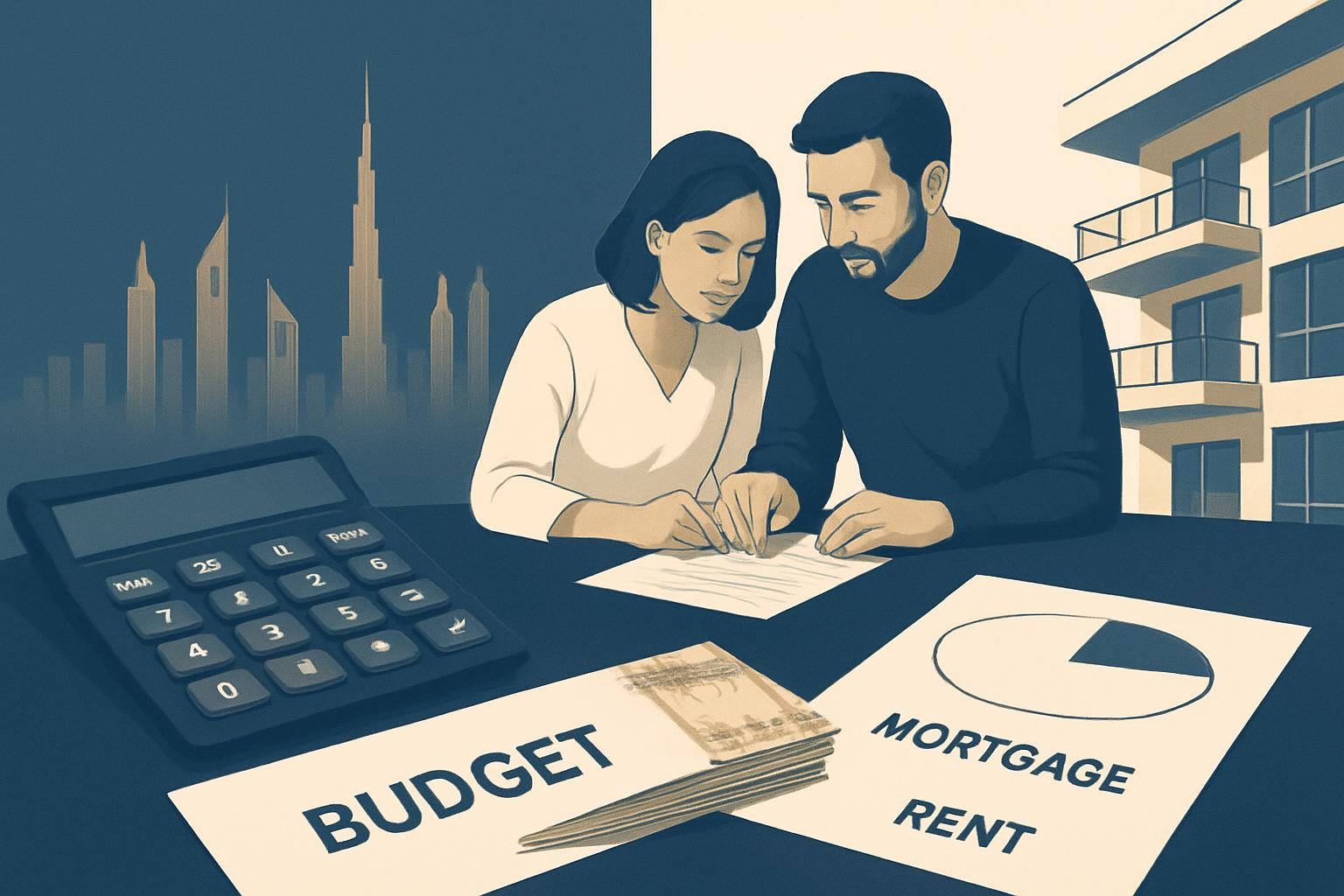
Should Dubai couples buy together or wait?
If you are a couple looking at Dubai property, the real question is not just whether you can borrow more together. It is whether the joint Dubai property deposit, monthly repayment and upfront buying costs still leave enough room to live comfortably. Combined income can improve affordability, but it also ties both of you to one deal, one payment and one timeline.
The short answer
Buying together can make sense if both incomes are stable, the deposit is realistic and the monthly repayment still works if one salary gets disrupted. Waiting can make sense if one partner is carrying most of the deposit, the numbers only work at the edge, or you are not sure how the ownership should be structured.
For Dubai couples, the decision usually comes down to four things: how much deposit you have, how much the mortgage would cost each month, who owns what share, and whether you could still manage if one of you had a gap in income. A bigger joint budget does not remove risk. It just changes where the pressure sits.
Dubai couples should buy together only if the joint deposit, monthly repayment and reserve cash still work on one income, not just two. If the deal only feels affordable when both salaries are fully relied on, it is usually better to pause, run the numbers properly and check both budgets before committing to a property.
Why joint income changes the decision
A joint application can increase the mortgage size a lender may consider, but it does not automatically make the purchase sensible. In the UAE, affordability depends on income, debts, deposit size, interest rate, term, lender criteria and the rest of your monthly commitments. Salary alone is not the answer.
For couples, the bigger issue is often not approval. It is comfort. If one partner earns more, or one income is variable, you need to know whether the deal still works if circumstances change. That means checking the monthly repayment, service charges, insurance, maintenance and a cash buffer, not just the headline price.
One-income versus two-income buying scenario
Below is a simple comparison for a completed residential purchase in Dubai. It is not a lender quote. It is a practical way to see how the numbers change when one salary is added to the application.
Assumptions used: completed apartment priced at AED 1,500,000; 20% deposit for an expat buyer on a standard residential mortgage; mortgage term of 25 years; indicative interest rate of 4.5%; no other debts; DLD fee and other buying costs estimated separately; monthly service charges not included in the mortgage payment.
| Scenario | Income basis | Indicative mortgage size | Estimated monthly repayment | What it means |
|---|---|---|---|---|
| One income | AED 25,000 per month | About AED 1,200,000 | About AED 6,650 | Tighter affordability and less spare cash after buying costs |
| Two incomes | AED 25,000 + AED 18,000 per month | About AED 1,200,000 | About AED 6,650 | Same house payment, but stronger income cover if both salaries are stable |
In this example, the mortgage payment does not change just because two people apply. What changes is the comfort level and the lender’s view of repayment capacity. The joint application may make approval more realistic, but the couple still needs to fund the deposit and buying costs.
What the deposit really looks like for Dubai couples
For many completed homes, expat buyers need around 20% to 25% deposit, depending on lender criteria, buyer status and property type. On a AED 1,500,000 apartment, that is roughly AED 300,000 to AED 375,000 before fees.
Then add upfront buying costs. Dubai Land Department transfer fee is commonly around 4% of the property value, agency commission is often around 2% where applicable, and other legal or admin costs may also apply. In practice, upfront costs can often add around 6% to 8% or more on top of the deposit.
Using the same example, the couple may need roughly:
- Deposit: AED 300,000 to AED 375,000
- Upfront buying costs: about AED 90,000 to AED 120,000 or more
- Total cash needed: roughly AED 390,000 to AED 495,000 before furnishing, moving and buffer money
That is why the deposit question is really a cash question. Many couples focus on the mortgage approval and undercount the amount needed to actually complete the purchase.
A practical decision framework for couples
- Check each salary separately.
- Add both incomes and remove any debts or commitments that reduce borrowing capacity.
- Estimate the deposit and upfront buying costs, not just the deposit alone.
- Stress-test the repayment on one income.
- Decide who owns what share before signing anything.
- Keep a reserve for service charges, maintenance, furnishings and an income gap.
If the repayment only works comfortably on both salaries, that is a warning sign. If it still works on one salary, you have more breathing room. For Dubai couples, that breathing room often matters more than borrowing the maximum available.
Who this applies to
- Couples planning to buy a Dubai apartment or townhouse together
- Expats comparing joint affordability before applying for a mortgage
- Overseas buyers looking at one partner buying alone versus buying together
- Partners who have different savings levels or different income stability
Who this does not apply to
- Cash buyers who are not using a mortgage
- Off-plan purchases with a developer payment plan that works differently from a standard mortgage
- Situations where a family trust, company structure or specialist ownership arrangement is being considered
Common mistake couples make
The most common mistake is treating the joint mortgage as if it solves the deposit problem. It does not. A higher combined income may increase borrowing capacity, but it does not reduce the Dubai property deposit, transfer fee or other upfront buying costs. Another mistake is ignoring what happens if one partner loses income, changes jobs or wants out later.
Couples also skip the ownership conversation. If one person pays more of the deposit, or one income is doing most of the heavy lifting, that should be clear before purchase. Do not assume it will sort itself out later.
What to do next
If you are still deciding whether to buy together or wait, check the numbers both ways: one income and two incomes. That gives you a clearer view of the deposit, the likely monthly repayment and the cash buffer you would still have after completion.
Use the QuickProperty budget checker to estimate your buying budget, then compare the result with a mortgage estimate if monthly repayments are the main question. If you want a repayment-focused view, try the QuickProperty mortgage calculator as well.
FAQs
Can Dubai couples buy property together with different salaries?
Yes, but the stronger salary does not remove the need to check affordability properly. A joint application may help with borrowing capacity, but the purchase should still work if the lower earner has a gap in income or the higher earner changes jobs. Ownership shares should also reflect how the deposit and repayments are being split.
How much deposit do couples need for Dubai property?
For many completed residential purchases, expat buyers commonly need around 20% to 25% deposit, depending on lender criteria and property type. Couples still need to add transfer fees, agency commission where applicable and other buying costs. On a AED 1.5 million purchase, the total cash needed can easily be much higher than the deposit alone.
Is it better to rent or buy as a couple in Dubai?
Renting may make sense if your income is still changing, your deposit is not ready, or the monthly repayment would stretch you too far after fees and service charges. Buying may make sense if your deposit is in place, your jobs are stable and the property still fits your budget after all upfront costs.
What if one partner is contributing more to the Dubai property deposit?
That should be agreed in writing before purchase. If one partner is putting in more cash, the ownership split, responsibility for repayments and what happens if the property is sold later should be clear. Do not rely on informal assumptions. A conveyancer or qualified adviser can help structure the paperwork appropriately.
Should we use a mortgage calculator or budget checker first?
If your main question is whether you can realistically afford to buy, start with the budget checker. If you already know the property price and want to estimate repayments, use the mortgage calculator. For couples, it is often useful to run both, because affordability and monthly repayment are related but not the same thing.
If you want a quick sanity check before speaking to an agent or broker, start with the QuickProperty budget checker and compare both income scenarios side by side.